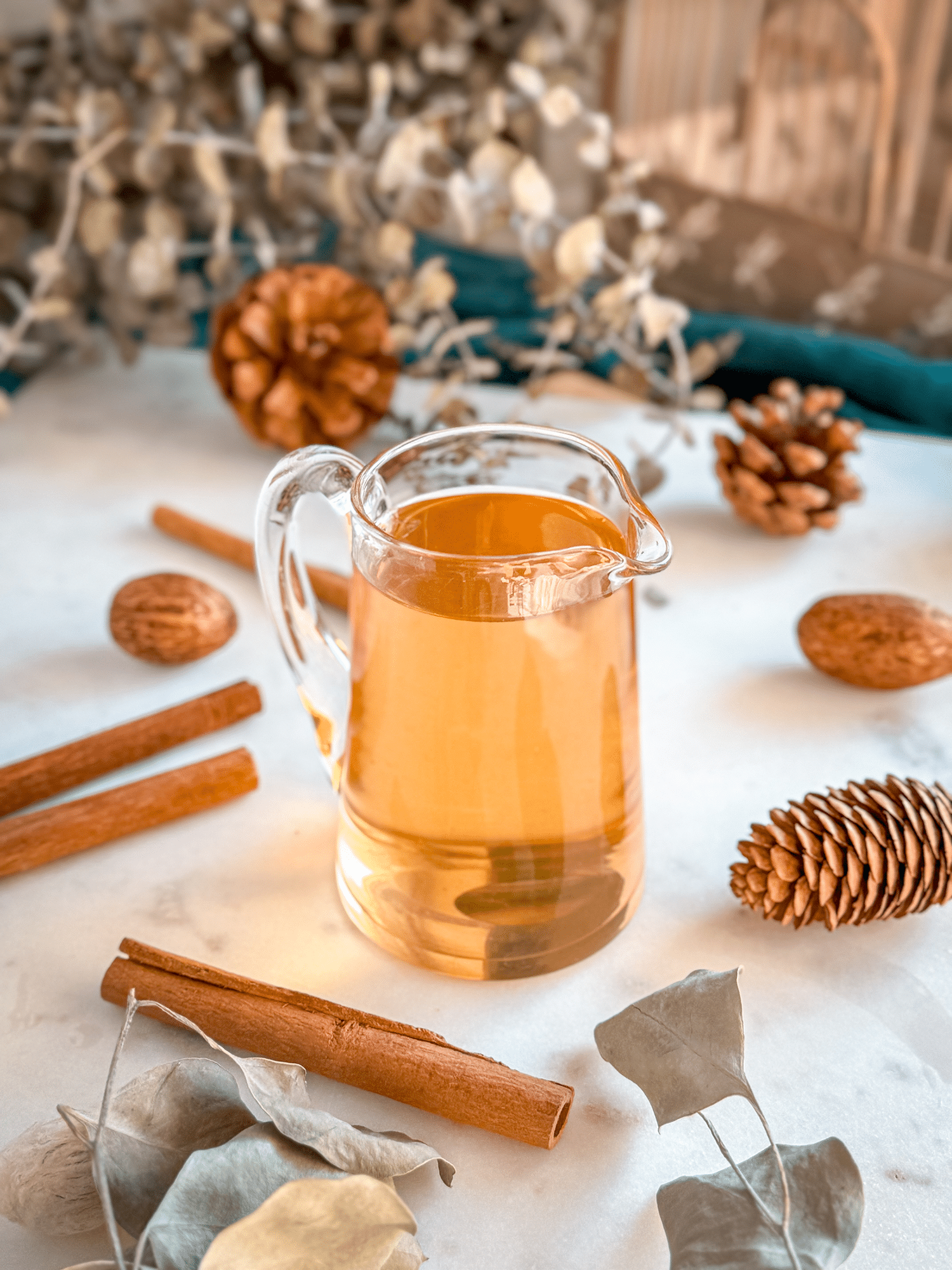
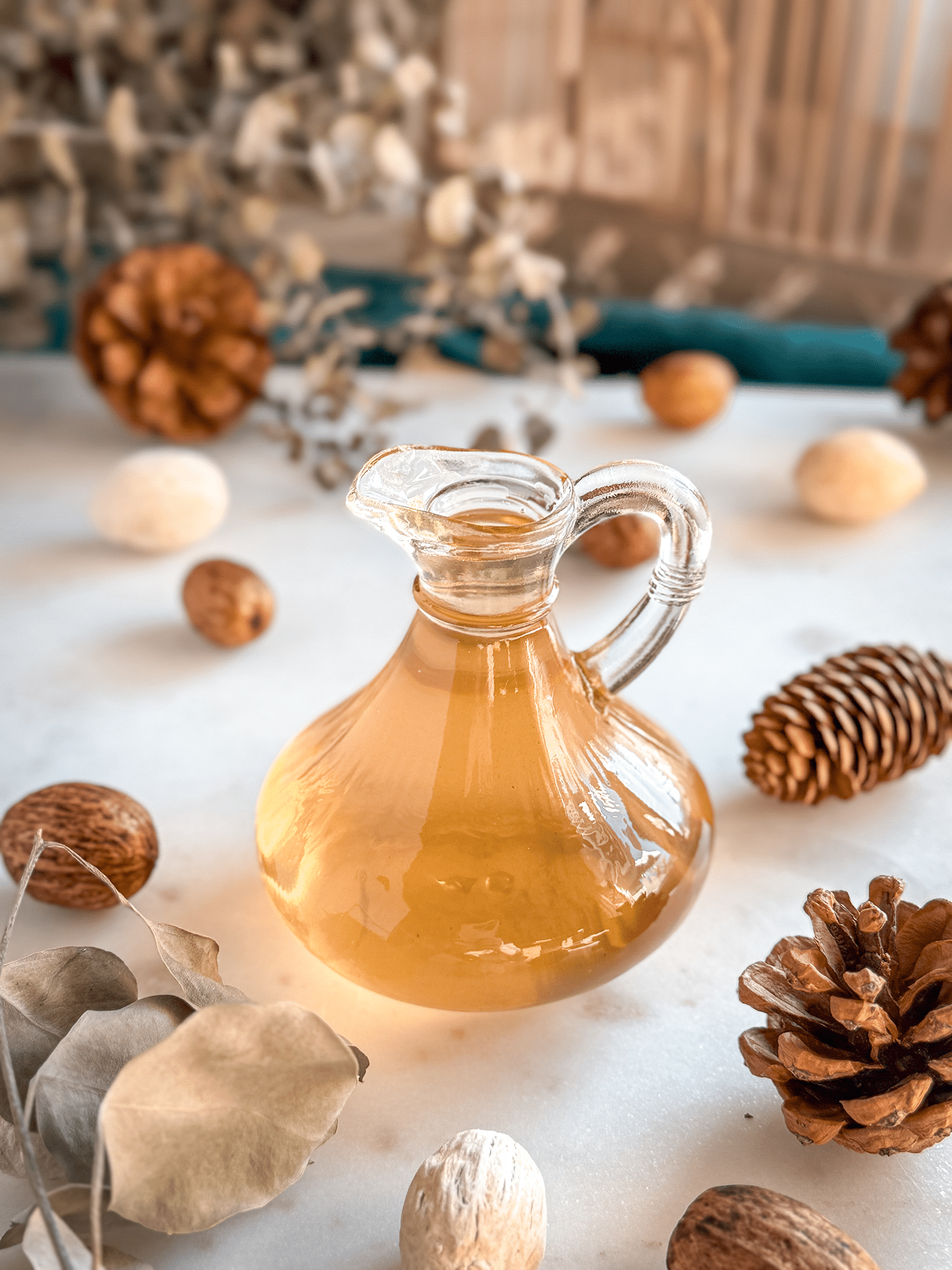
Jasmine simple syrup brings a floral, slightly sweet touch to cocktails, mocktails, lemonade, and even iced tea. Yes, be still my heart.
Jasmine is one of those flavors that is a little exotic, super easy to make, and a fun way to bring garden blooms into your glass.

Whether you’re using fresh jasmine flowers or dried blossoms, this syrup adds a soft, perfumed flavor that pairs beautifully with gin, citrus, or green tea.
Oh, and sparkling wine– we can never forget our mimosas, French 75s, and spritzes!
Tools you will need
- Saucepan
- Wooden spoon or spatula
- Fine mesh sieve or strainer
- Cheese clothes
- Glass jar or bottle with lid
- Measuring cups
- Food thermometer
- Dried jasmine flowers
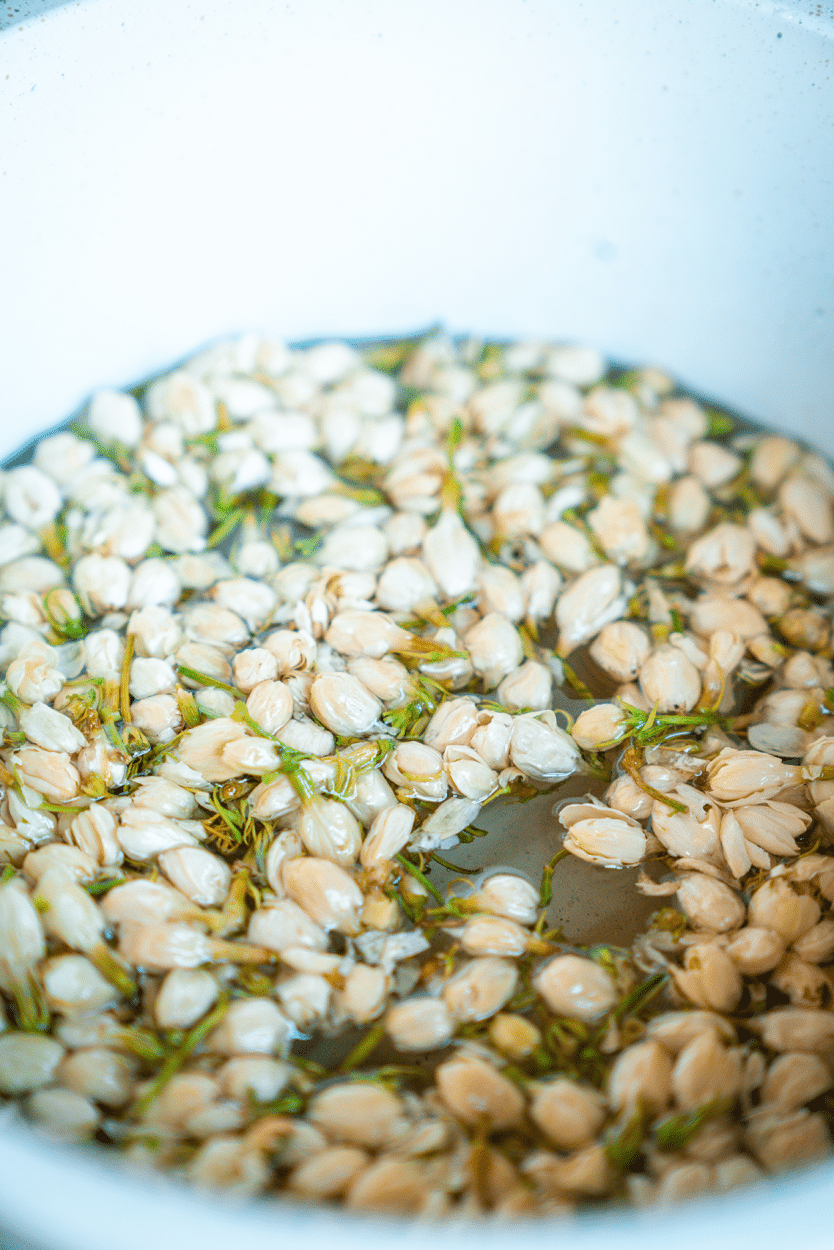
Safety Note: Not All Jasmine Is Edible!
Only certain types of jasmine are safe to eat. For this recipe, use:
- Jasminum sambac (Arabian jasmine) – the type used in jasmine tea
- Jasminum officinale (Common or Poet’s jasmine) – also considered food-safe
⚠️ Avoid using look-alike plants like Carolina jasmine (Gelsemium sempervirens) or Yellow jasmine, which are toxic and not safe for consumption.
Pink Jasmine (Jasminum polyanthum) is not considered edible. While it smells amazing and is commonly grown as a houseplant or ornamental vine, it’s not used in food or drink.
There’s limited information about its safety for consumption, which means it should be avoided when making syrups or infusions.
When in doubt, buy dried jasmine flowers intended for tea (like this one) from a trusted source. Always make sure flowers are free of pesticides or chemicals. If you don’t want to make jasmine syrup, you can also buy it HERE.
| Jasmine Type | Edible? | Notes |
| Jasminum sambac (Arabian Jasmine) | Yes – Common in teas and safe for syrup | Used in jasmine tea, strong floral aroma |
| Jasminum officinale (Common/Poet’s Jasmine) | Yes – Generally accepted as food-safe | Mild fragrance, edible in small amounts |
| Jasminum polyanthum (Pink Jasmine) | ⚠️ Not Recommended – Not confirmed safe to eat | Fragrant, ornamental plant, not confirmed for food use |
| Gelsemium sempervirens (Carolina Jasmine) | ❌ No – Toxic if ingested | Highly toxic, not a true jasmine |
| Gelsemium sempervirens (Carolina Jasmine) | ❌ No – Toxic if ingested | Often misidentified, avoid for culinary use |
Pro Tips:
- Use organic, unsprayed edible jasmine if you’re picking fresh from your garden.
- Dried jasmine green tea (loose leaf) works too—just make sure it’s food-grade and the green tea will give you a slightly different flavor + caffeine.
- The syrup may take on a pale yellow or green hue, depending on your flowers. Totally normal!
How to Use Jasmine Syrup:
- Stir into iced green tea for a floral twist
- Add to gin or vodka cocktails (like a Jasmine Southside!)
- Drizzle over vanilla ice cream or mix into lemonade
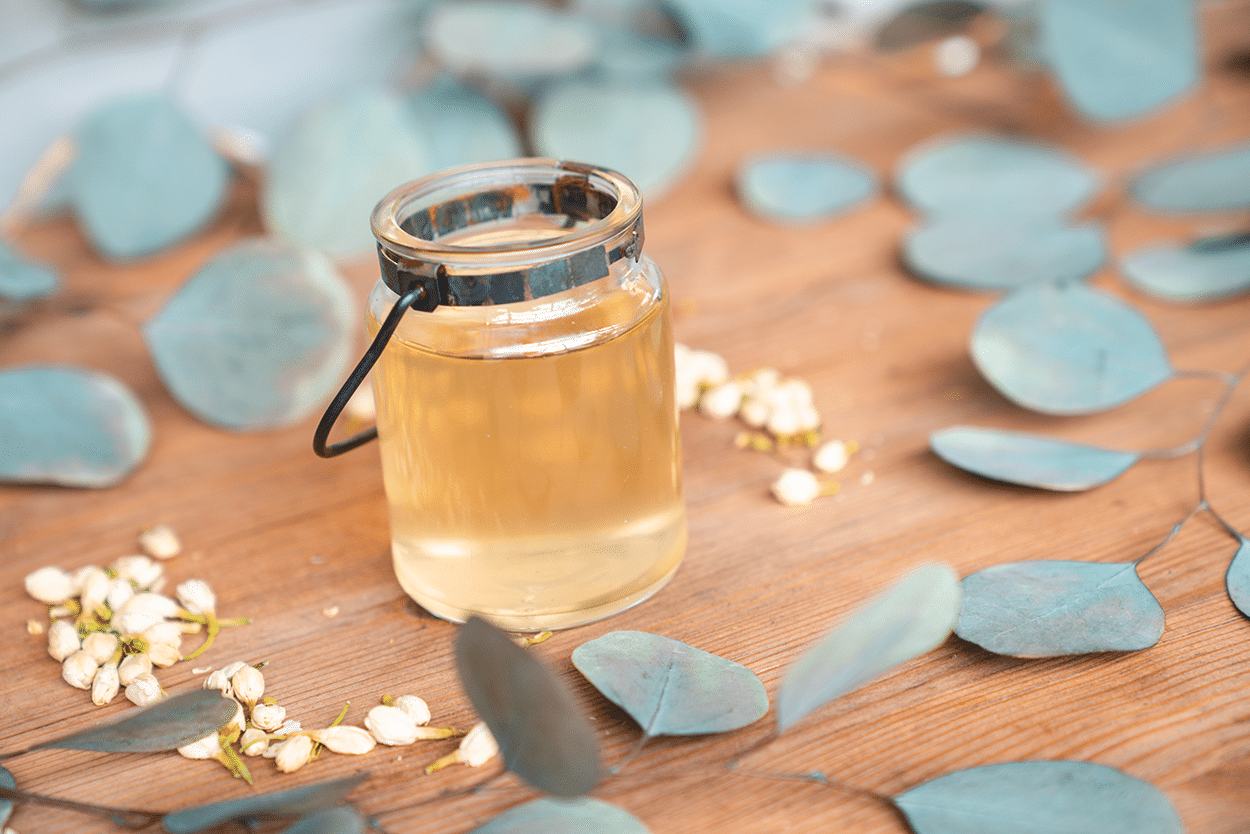
How to make Jasmine simple syrup
Ingredients:
- 1 cup water
- 1 cup granulated sugar
- ½–1 cup fresh jasmine flowers*
*If using dried jasmine flowers, use ¼–½ cup instead.
Instructions:
- Heat the water and sugar in a small saucepan over medium heat. Stir until the sugar fully dissolves.
- Take the water off the heat and allow to cool to 160°F (71°C).
- Add jasmine flowers and let it steep for about 10–60 minutes. Taste as you go—longer steeping = stronger flavor.
- Strain out the flowers using a fine mesh sieve or cheesecloth.
- Let the syrup cool completely, then pour into a clean glass jar or bottle. Store in the fridge for up to 2 weeks.

Jasmine SimpleSyrup
Equipment
Ingredients
- 1 cup water
- 1 cup granulated sugar
- ½ cup fresh jasmine flowers (up to one cup) *If using dried jasmine flowers use ¼–½ cup instead.
Instructions
- Heat the water and sugar in a small saucepan over medium heat. Stir until the sugar fully dissolves.
- Take the water off the heat and allow to cool to 160°F (71°C).
- Add jasmine flowers and let it steep for about 10–60 minutes. Taste as you go—longer steeping = stronger flavor.
- Strain out the flowers using a fine mesh sieve or cheesecloth.
- Let the syrup cool completely, then pour into a clean glass jar or bottle. Store in the fridge for up to 2 weeks.