
If mint is the queen of summer cocktails, basil is its cool, confident cousin. With its sweet, peppery bite and bright green leaves, basil can bring both freshness and complexity to a cocktail—whether you’re shaking up something fruity or building a garden-inspired gin spritz.
You probably already have basil growing in your kitchen or backyard. It’s one of the easiest herbs to grow and one of the fastest ways to upgrade your drinks. I always have a few varieties growing in my herb bed, and also some in a pot on my windowsill. It really is the perfect herb plant no matter where you live- house, apartment, dorm room, etc.

Flavor Profile of Basil
Basil has a soft, sweet herbal flavor with a peppery kick. Some varieties also have subtle notes of clove, citrus, or even licorice—depending on the type you’re using.
Types of Basil to Use in Cocktails
There are many varieties of basil, and each adds something a little different to your drink:
- Sweet Basil (Genovese): Classic Italian basil with a balanced, sweet-peppery flavor. The go-to for most cocktails and what most people think of when you say “basil.”
- Thai Basil: Spicier, with a strong licorice note. Pairs beautifully with ginger, chili, or tropical flavors.
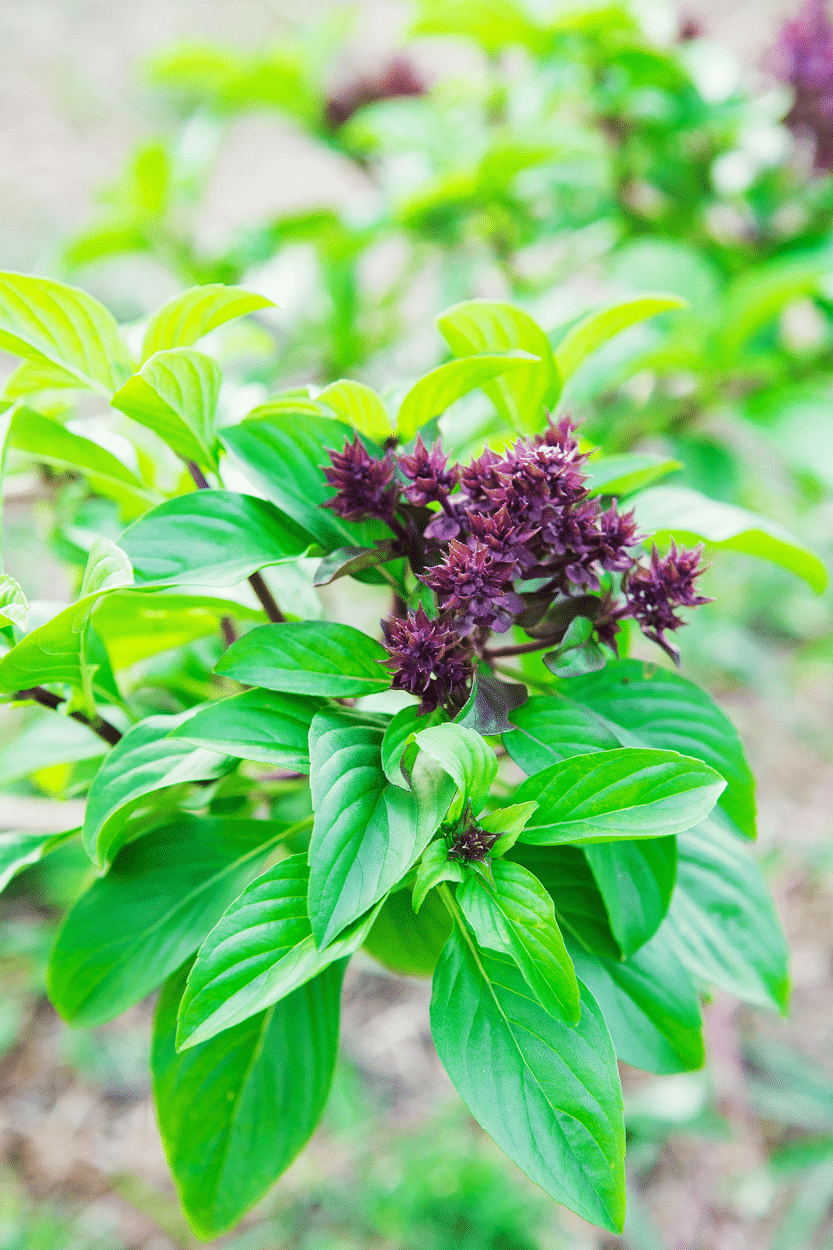
- Purple Basil: Slightly spicier and stunning in color. Use for a dramatic garnish or colorful syrup.
- Lemon Basil: Bright and citrusy—great for gin spritzes or lemon-based drinks.
- Cinnamon Basil: Warm and spicy, perfect in bourbon or fall-inspired cocktails.

Best Ways to Use Basil in Cocktails
Basil is incredibly flexible and can be used in several ways behind the bar:
1. Muddled in the Shaker
Add basil leaves with citrus juice, fruit, or syrup, and give it a gentle muddle. This releases the essential oils without making your drink bitter.
Tip: Don’t over-muddle basil. A light press is all you need.
2. Infused Simple Syrup
Simmer equal parts sugar and water, remove from heat, and steep a handful of basil leaves for 5–10 minutes. Strain and chill.
Use it in: Spritzes, sours, lemonades, or anything that needs a sweet herbal note.
3. Infused Spirits
Add fresh basil to vodka, gin, or white rum and steep for 1–2 days. Strain and use as a custom base.
4. Garnish
Add a small basil leaf or baby sprig to the top of your cocktail. Gently slap it between your hands before adding to release the aroma.
Best Spirits to Pair with Basil
- Gin – Herbaceous and citrus-forward, gin and basil are made for each other.
- Vodka – Clean and crisp, it lets basil shine.
- Tequila (Blanco) – Bright, peppery notes make basil a fun twist in margaritas.
- White Rum – Especially good in tropical drinks with citrus or berries.
- Champagne or Prosecco – Add basil syrup to bubbles for a refreshing spritz.
Flavor Pairings with Basil
- Strawberries
- Lemon or lime
- Watermelon
- Cucumber
- Mango or peach
- Ginger
- Honey
- Balsamic (in shrubs or syrups)
Basil Cocktail Recipe Ideas
- Strawberry Basil Smash
Muddled strawberries, basil, lemon, vodka, and simple syrup. - Basil Gimlet
Gin, lime juice, basil syrup, shaken and served up. - Peach Basil Margarita
Tequila, peach purée, lime, basil syrup, salt rim optional. - Cucumber Basil Collins
Gin, muddled cucumber and basil, lemon juice, simple syrup, soda water. - Basil Lemonade Spritz (Mocktail or Cocktail)
Basil syrup, lemon juice, sparkling water—add gin or vodka to spike it.

Basil Tips & Warnings
- Only use fresh basil. Dried basil doesn’t translate well into cocktails.
- Store it right. Basil wilts in the fridge—store in a glass of water at room temp.
- Don’t muddle too hard. You’ll release bitter compounds from the leaves.
- Use small leaves for garnish. They’re more tender, aromatic, and look better in the glass.
Safety Tips: Toxic Lookalikes and What to Avoid
Basil is generally very safe to use in cocktails, but if you’re foraging, it’s smart to stay cautious.
Safe Culinary Basil Varieties (All Edible):
- Sweet Basil (Genovese)
- Thai Basil
- Lemon Basil
- Purple Basil
- Cinnamon Basil
These are all Ocimum basilicum or close relatives and are perfectly safe for use in food and drink.

Herbs That Can Be Confused with Basil:
1. Ornamental or Decorative Basil Hybrids
Some basil varieties are grown more for scent or looks than culinary use. They might not be toxic, but they can taste unpleasant—or may have been treated with non-food-safe pesticides.
Tip: Only use herbs labeled as edible or culinary-grade.
2. Perilla (Shiso or “Wild Basil”)
This herb is sometimes confused with purple basil. It’s safe in small quantities and commonly used in Japanese cuisine, but not the same as basil and can contain compounds harmful in large amounts if wild foraged.
Tip: If you didn’t grow it or buy it labeled as shiso or basil, double-check before using.
3. Nearby Toxic Lookalikes in the Garden
While not visually identical, plants like foxglove or angel’s trumpet can be dangerous if accidentally harvested alongside herbs.
Tip: Always positively ID your plants. If in doubt, take a sample to a nursery or compare it to trusted herb guides online.

Safe Herb-Use Practices for Cocktails:
- Only use fresh herbs labeled for culinary use.
- Always wash herbs thoroughly before adding them to drinks.
- Avoid florist-grade plants—they may be treated with unsafe chemicals.
- When in doubt, buy seeds from a reputable herb supplier and grow your own.
Whether you’re muddling basil for a Hot Girl Summer Gin Smash or infusing it into a syrup for a sparkling spritz, this herb is one of the most versatile tools in a cocktail lover’s garden. Stick with culinary varieties, avoid over-muddling, and always know what you’re using—and you’ll be rewarded with flavor that’s bold, herbal, and completely refreshing.


