Delicate, fragrant, and full of flavor, elderflowers and elderberries have been used in drinks for centuries (hello Hugo Spritz!). Y
ou either love or hate elderflower (kind of like the crazy people who think cilantro tastes like soap), and I’ll be the first to admit that a little goes a long way.
However, this luscious flower and berry can elevate just about anything from cocktails to mocktails. Just ask my kids- they love it!
From bubbly spritzes to rich syrups and bold infusions, these plants bring a unique twist to modern cocktails. But not all parts of the elder plant are safe—so let’s break it down.
What Is the Elder Plant?
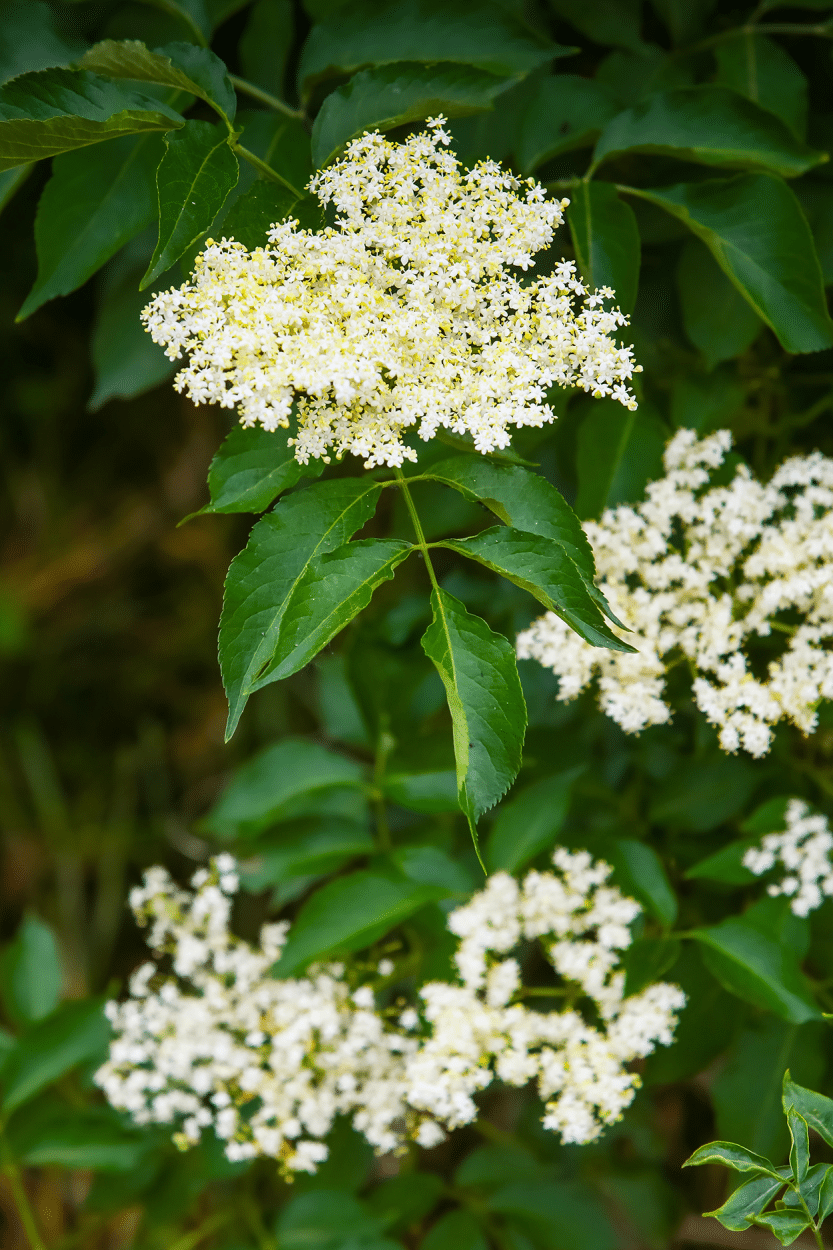
The elder plant—Sambucus—is a flowering shrub commonly found across Europe and North America. The two main parts used in cocktail-making are:
- Elderflowers – Creamy white blossoms with a sweet, floral aroma.
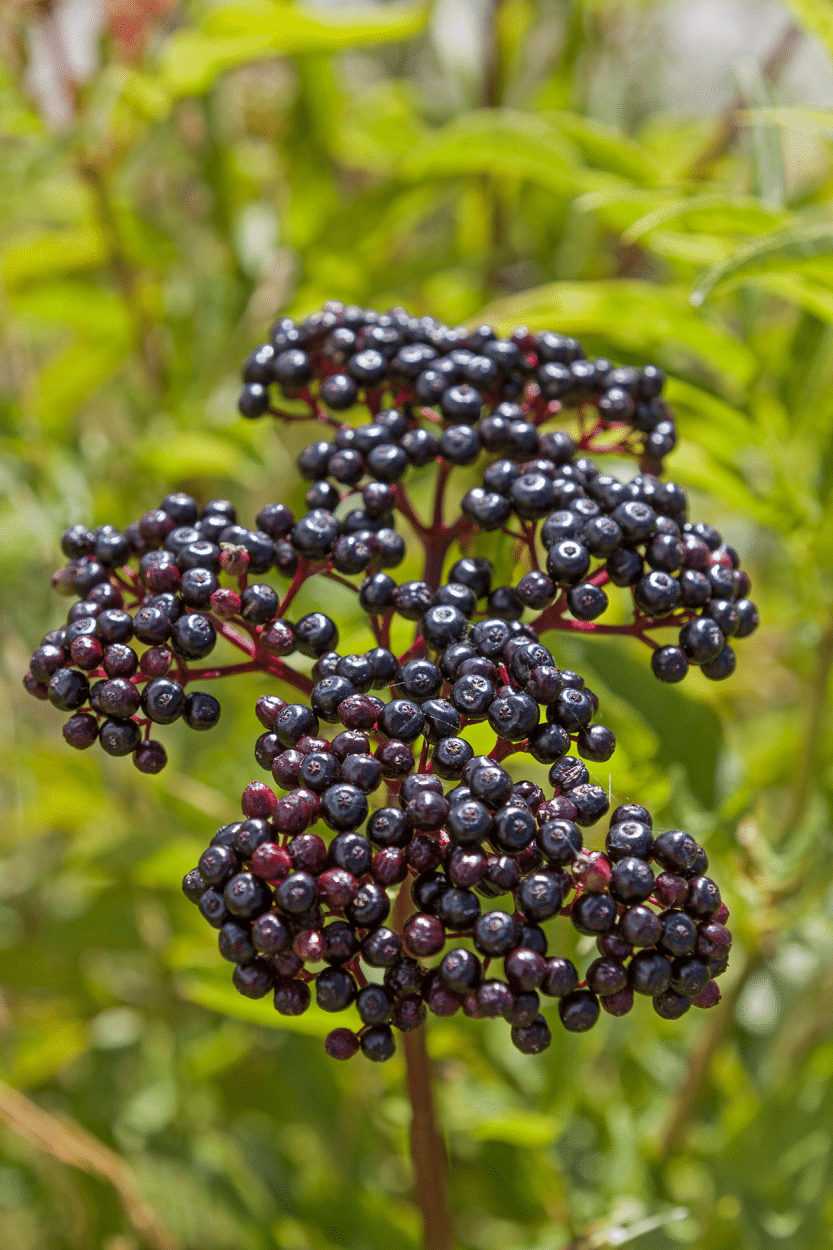
- Elderberries – Dark purple berries with a tart, earthy flavor.
The most common and safest variety for food and drink is Sambucus nigra (European black elder).
Growing an Elder Plant
I have yet to plant an Elder. They can get quite big, and I haven’t figured out where I can put it except a large pot in my driveway.
It’s also only zoned for 4-8, and I’m in a 10 planting zone. It doesn’t necessarily stop me (according to a lot of research I can grow a black elder plant in Southern California despite our higher zone and microclimates), it’s just harder to find a plant locally.
Because of this, I have to buy dried or source local fresh elderflowers and elderberries.
It’s not ideal, as you know I love to walk outside and just pick stuff, but not everyone can have a giant farm for their cocktails, right?
Are Elderflowers and Elderberries Safe to Use?
Yes, when prepared correctly:
- SAFE:
- Fresh or dried elderflowers
- Cooked elderberries (juiced, jammed, or made into syrup)
- Elderflower liqueurs (like St-Germain)
- Elderberry syrups (used medicinally and in drinks)
- NOT SAFE:
- Raw elderberries – contain cyanogenic glycosides, which can cause nausea and other symptoms.
- Stems, leaves, and roots – also toxic and should never be consumed.
Bottom line: only use elderflowers and cooked elderberries from the black elder variety (Sambucus nigra).
Always skip red elder (Sambucus racemosa), which is considered more toxic.
Other Names You Might See
- Elderflower: European Elder, Black Elder Flower, Sambucus Flower
- Elderberry: Sambucus Berry, Black Elderberry, Elder Juice (when processed)
How to Use Elderflower in Cocktails
Elderflowers bring a fresh, floral note perfect for light, bright cocktails.
- Liqueur – Try elderflower liqueur (like St-Germain) in spritzes, gin sours, or champagne cocktails.
- Syrup – Make a simple syrup with dried or fresh blossoms for lemonades, iced teas, or mojitos.
- Infusions – Steep flowers in gin or vodka for 24–48 hours to create your own floral infusion.
How to Use Elderberries in Cocktails
Elderberries bring a richer, darker fruit flavor—great for fall or winter cocktails.
Syrup
Simmer elderberries with sugar and water to create a tart-sweet syrup (also great for mocktails!).
Shrub
Combine elderberry syrup with vinegar to make a tangy shrub perfect for mixing with bourbon or soda.
Bitters or Tinctures
Elderberry bitters add depth to an Old Fashioned or Manhattan.
Last Things You Need to Know
- Always use trusted sources for elderflowers and elderberries—don’t pick wild unless you’re 100% sure.
- Avoid using any part of the elder plant that hasn’t been properly cooked or processed.
- Floral flavors pair beautifully with citrus, sparkling wine, gin, vodka, bourbon, rosemary, thyme, and berries.
Looking for Elderflower Recipes?
Check out our full lineup of elderflower and elderberry cocktail recipes for every season and spirit.