
If you’ve seen a cocktail magically shift from deep blue to vibrant purple or pink right before your eyes, chances are it had one magical ingredient: butterfly pea flower.
This bright blue botanical took the mixology world by storm a few years back, specifically when Empress Gin launched.
The edible flower is beautiful, natural, and reacts in mesmerizing ways when combined with other ingredients.

However, I have yet to find a bartender who can use butterfly pea flower to make a drink that doesn’t taste… well… purple. You can guess what my latest cocktail mission I bet.
Here’s everything you need to know about this purple powerhouse and how it’s being used in cocktails, and what possibilities await this little guy.
What Is Butterfly Pea Flower?
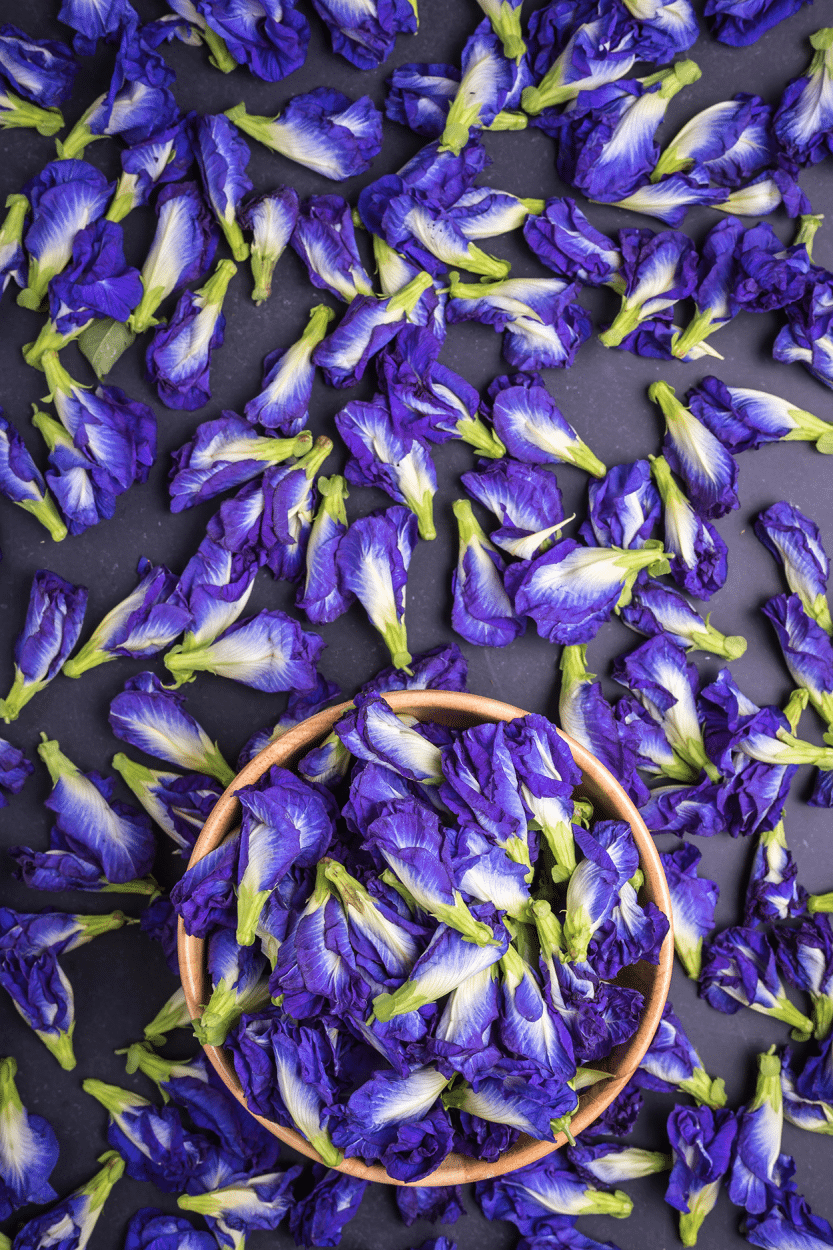
Butterfly pea flower comes from the Clitoria ternatea plant, native to Southeast Asia. Traditionally used in herbal teas and natural dyes, it’s known for its vibrant blue color and subtle earthy flavor.
When steeped in hot water, the petals release a deep indigo hue that can be used in teas, syrups, and infusions. But the real magic happens when you add acid—like lemon or lime juice.
The pH change causes the liquid to shift from blue to purple or even pink, making it a huge hit in drinks and desserts alike.
Why It’s Popular in Cocktails
Butterfly pea flower isn’t just about the look—it’s also incredibly versatile.
- It’s all-natural: No artificial coloring needed to wow a crowd.
- It reacts to acidity: Creating dynamic, color-changing drinks.
- It plays well with florals, herbs, and citrus: So it can fit into nearly any flavor profile.
- It’s great in teas, syrups, and ice: Offering different ways to introduce it into a drink.
It has a very mild flavor—slightly earthy or grassy—which makes it ideal for letting other ingredients shine while still delivering a visual punch.
Ways to Use Butterfly Pea Flower in Mixology
You don’t need to be a pro to start using butterfly pea flower in your own creations. Here are some of the most common ways it shows up in cocktail crafting:
1. Butterfly Pea Tea
Steep the dried flowers in hot water, cool it down, and use it as a mixer or base. It’s a great starting point for both mocktails and cocktails.
2. Color-Changing Syrup
Create a simple syrup by combining brewed butterfly pea tea with sugar. You can use this just like any flavored syrup, adding sweetness and visual drama.
3. Infused Spirits
Soak dried flowers in vodka, gin, or rum for a few hours. The result is a richly colored spirit that can be used in martinis, spritzes, or G&Ts.
4. Magic Ice Cubes
Freeze the brewed tea into ice cubes. When dropped into acidic drinks, they slowly melt and transform the drink color as you sip.
5. Garnish or Dust
Crushed dried petals can also be used as an edible garnish or rimmed along a cocktail glass for a natural pop of color.
Pro Tips for Using Butterfly Pea Flower
- Start with strong tea: The more concentrated the brew, the more vibrant the color.
- Don’t oversteep: 5–7 minutes is plenty to avoid bitterness.
- Use clear spirits: Vodka, gin, and light rum let the color shine the most.
- Store it well: Keep dried flowers in a cool, dry place or store syrups in the fridge for up to two weeks.
What Else You Need to Know
Butterfly pea flower is one of the most playful and photogenic ingredients you can add to your mixology toolkit.
It brings a little science, a lot of style, and endless opportunity for creativity—especially when you’re designing signature drinks.
Whether you’re adding it to a spritz, creating a layered mocktail, or experimenting with herb-infused syrups, butterfly pea flower is the kind of ingredient that turns a drink into the social media photo everyone will want in their feed.


